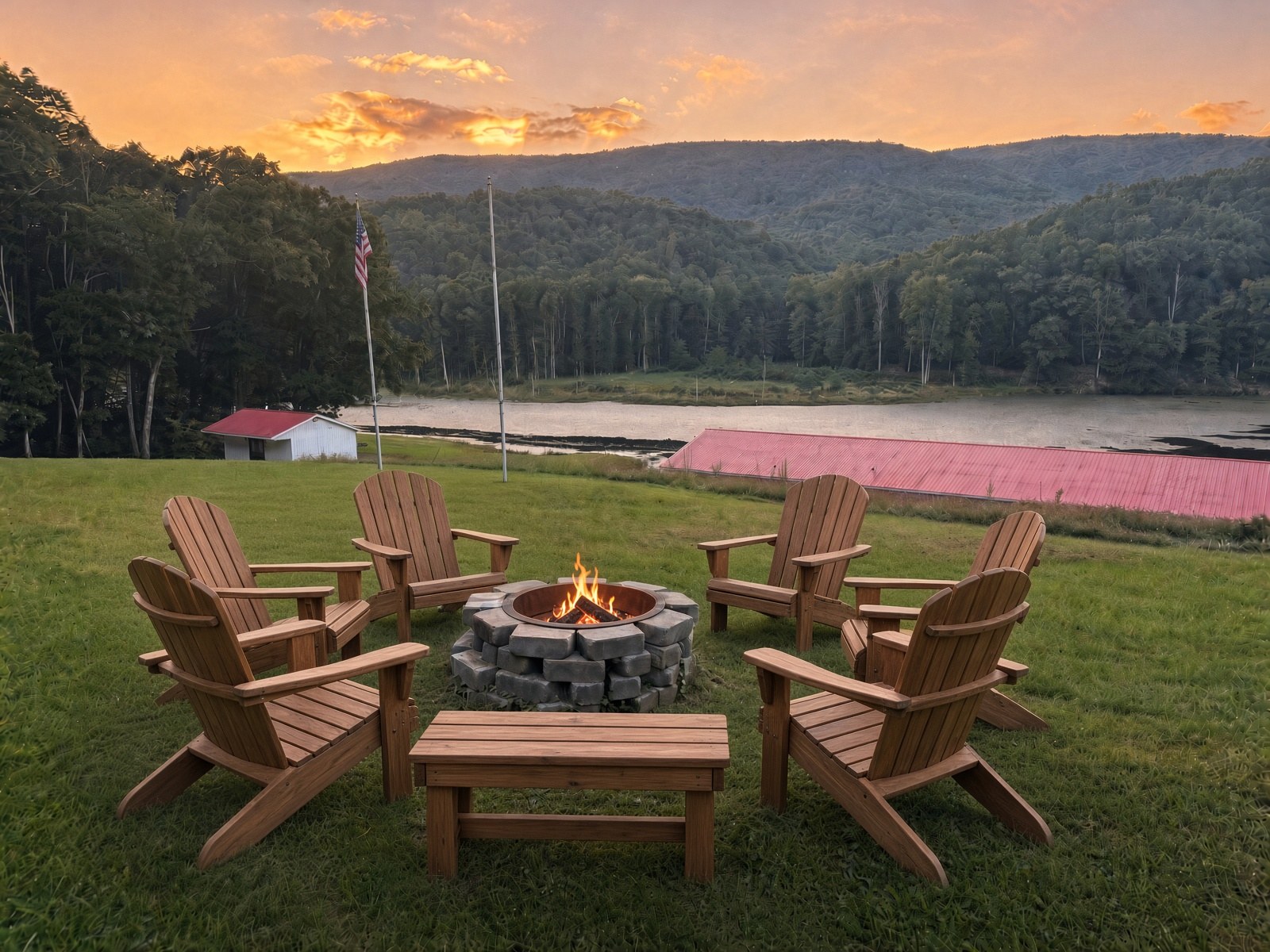
A private lake. A valley of your own. Jefferson National Forest along three sides of the estate. This combination of land, water, and privacy is rare. For a stay or a wedding weekend, it is yours to be part of.
The public road is farms. Barns, cattle, open pasture. At the end of that is a private gate and a code that is yours for the stay. Beyond it, a gravel road runs a mile through the forest. There is no neighbor in that mile.
The road opens above the lake. The Lake Hall is on the water. Alexander Lodge is on the rise behind it. The cottage is in the trees, with its own door. The bathhouse sits apart from the hall, for guests sleeping there.
The property is 580 acres, bordered on three sides by Jefferson National Forest, with more than 40,000 acres of forest beyond. The creek begins four miles up the valley and is untouched by houses above the lake. The Appalachian Trail runs along the boundary. Trails on the property are there if you want a walk that does not leave the gate.
You can build a beautiful room. You cannot arrange a private lake, a forest boundary, and this much space around it in the same way. Here, those things are already together. The opportunity is to spend time in a place that would be difficult to recreate.
The valley feels far from the everyday. High-speed fiber internet keeps you connected when you need to check in, without giving up the quiet around you.
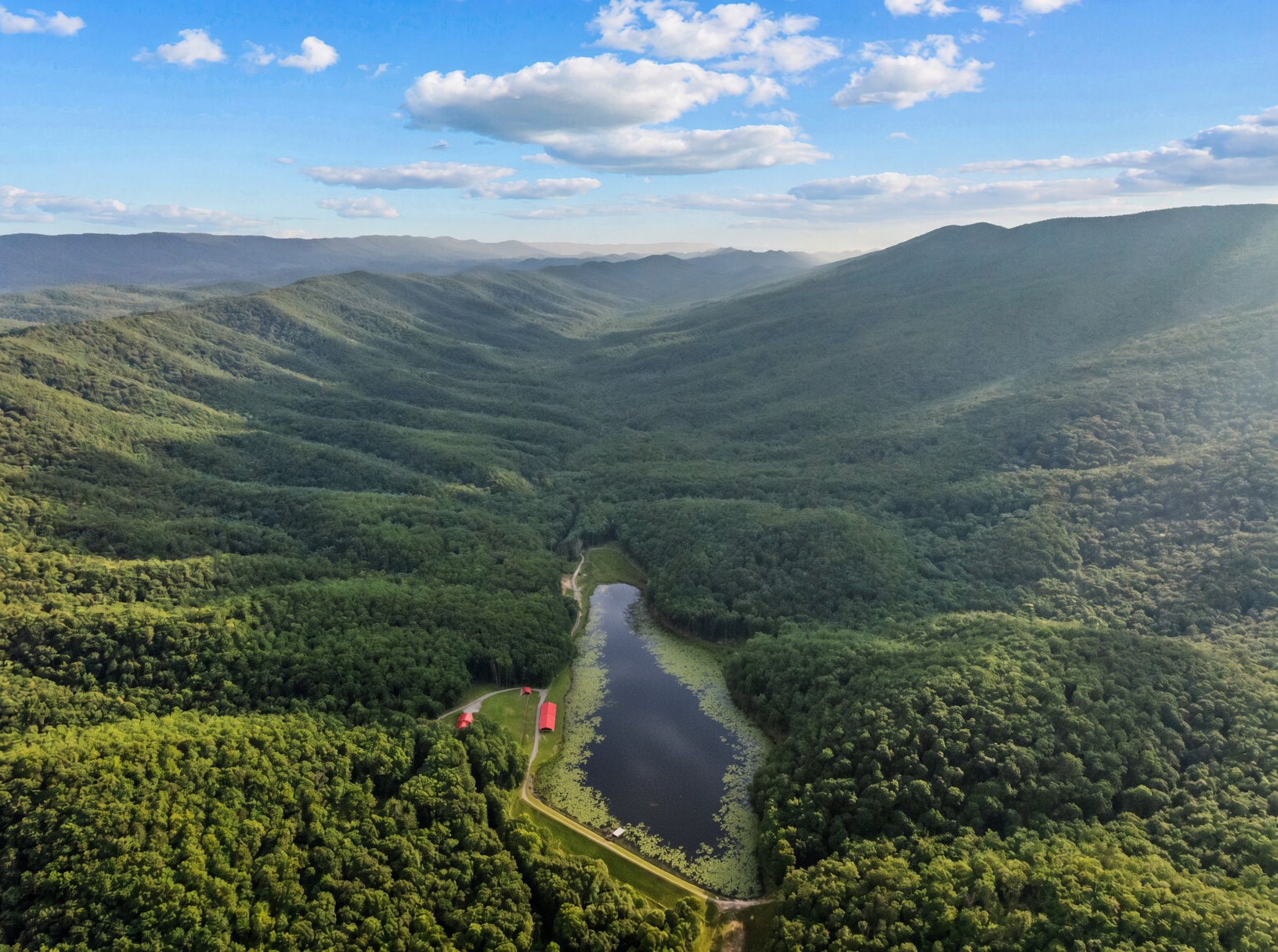
This valley is Hunting Camp Creek. In 1945, Norfolk and Western and Pocahontas Fuel Company bought the cut-over timber land for an executive retreat. Alexander Lodge was built in 1948 from timber cut on the property and named for Oakey Alexander, president of Pocahontas Fuel. Norfolk and Western funded the lodge and the dam.
Executives would fly down from New York City to trade their working days for quiet water and an unspoiled valley. The lodge was a place to step away, spend time outdoors, and return to the city rested. That sense of retreat is still part of being here.
In 1972, the company sold 45,800 acres to the United States for national forest, keeping the lake, the lodge, and the land around them. That sale explains the forest on three sides. The estate is what was held back.
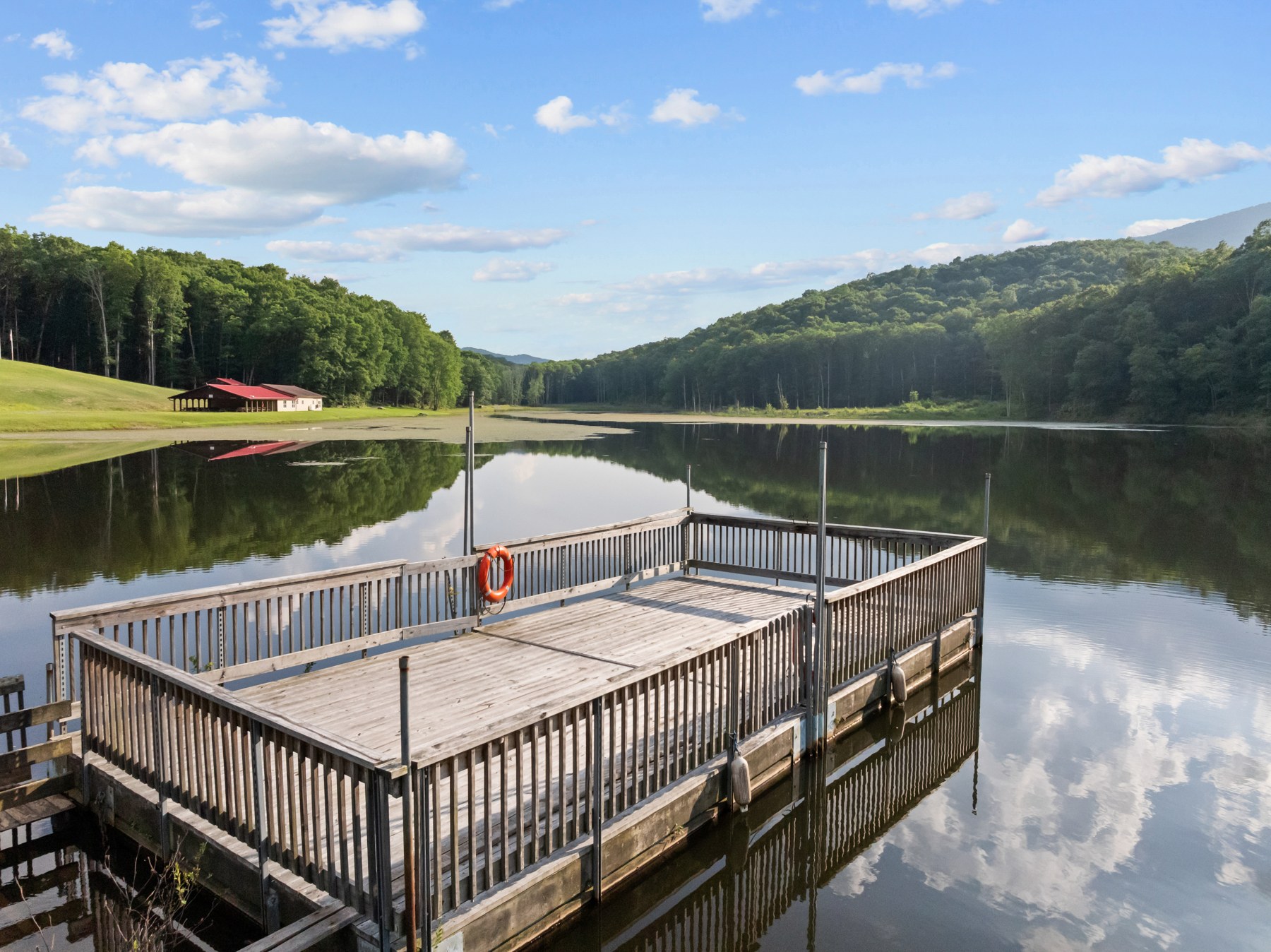
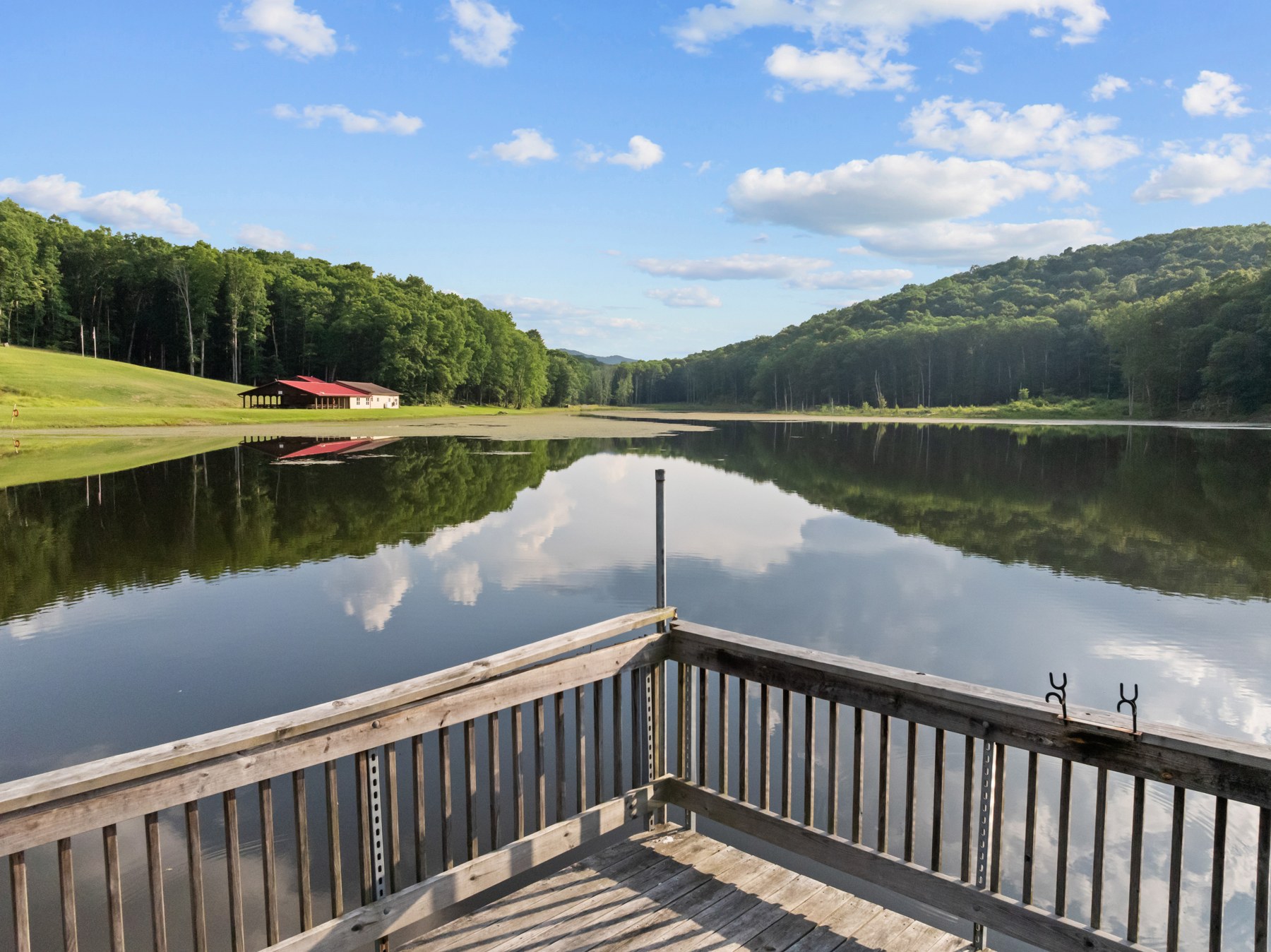
The private, stocked lake from two perspectives: the dock itself and the view from its edge. Fish, bring a kayak or paddleboard, or simply watch the hills reflected in the water. No one else is on the lake while the estate is yours.
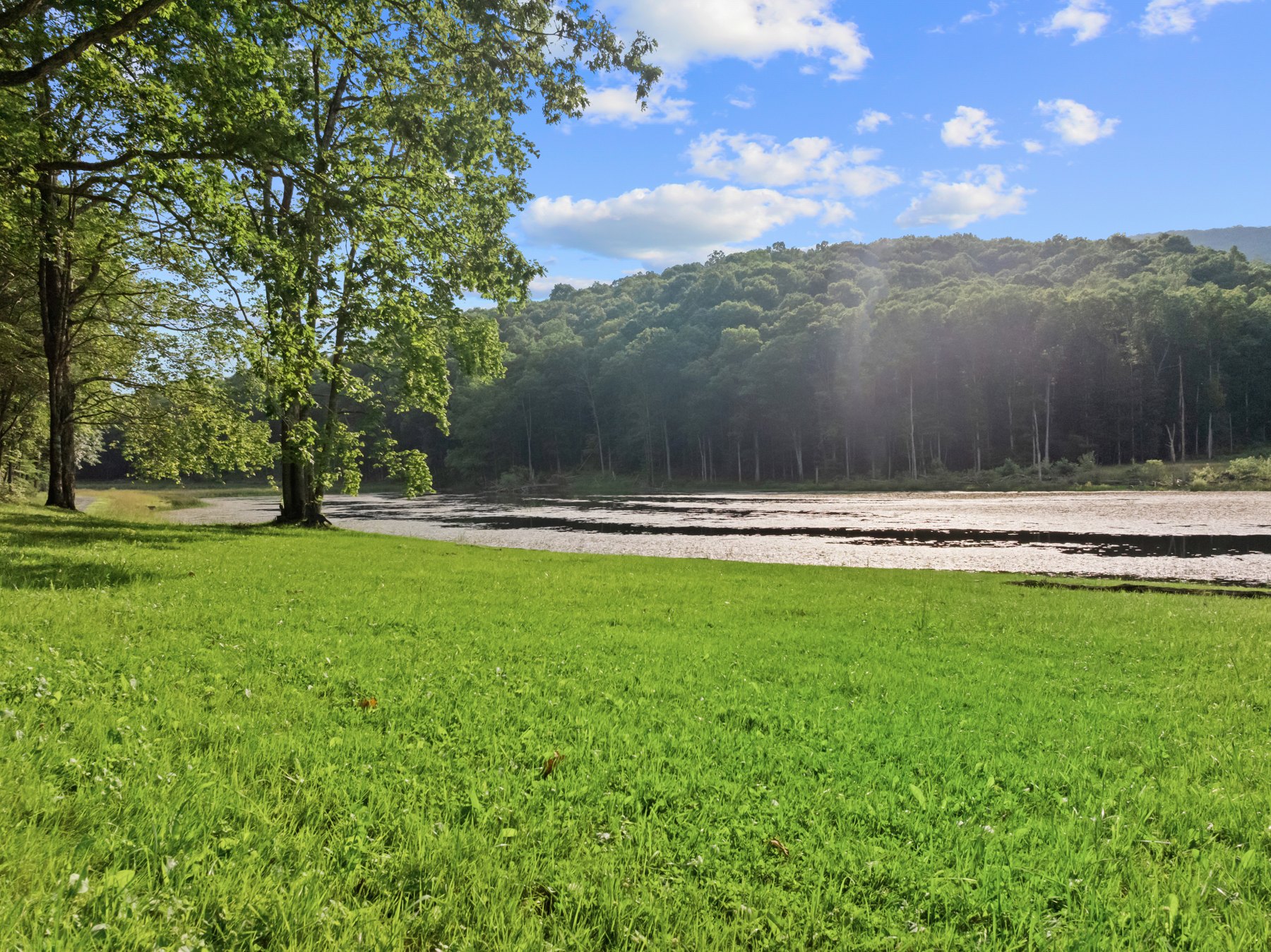
Open grass, shade beneath the trees, and the water alongside. A place to gather, find a quiet seat, or let an afternoon pass without a schedule.
The lakeside lawn, looking across to the forest.
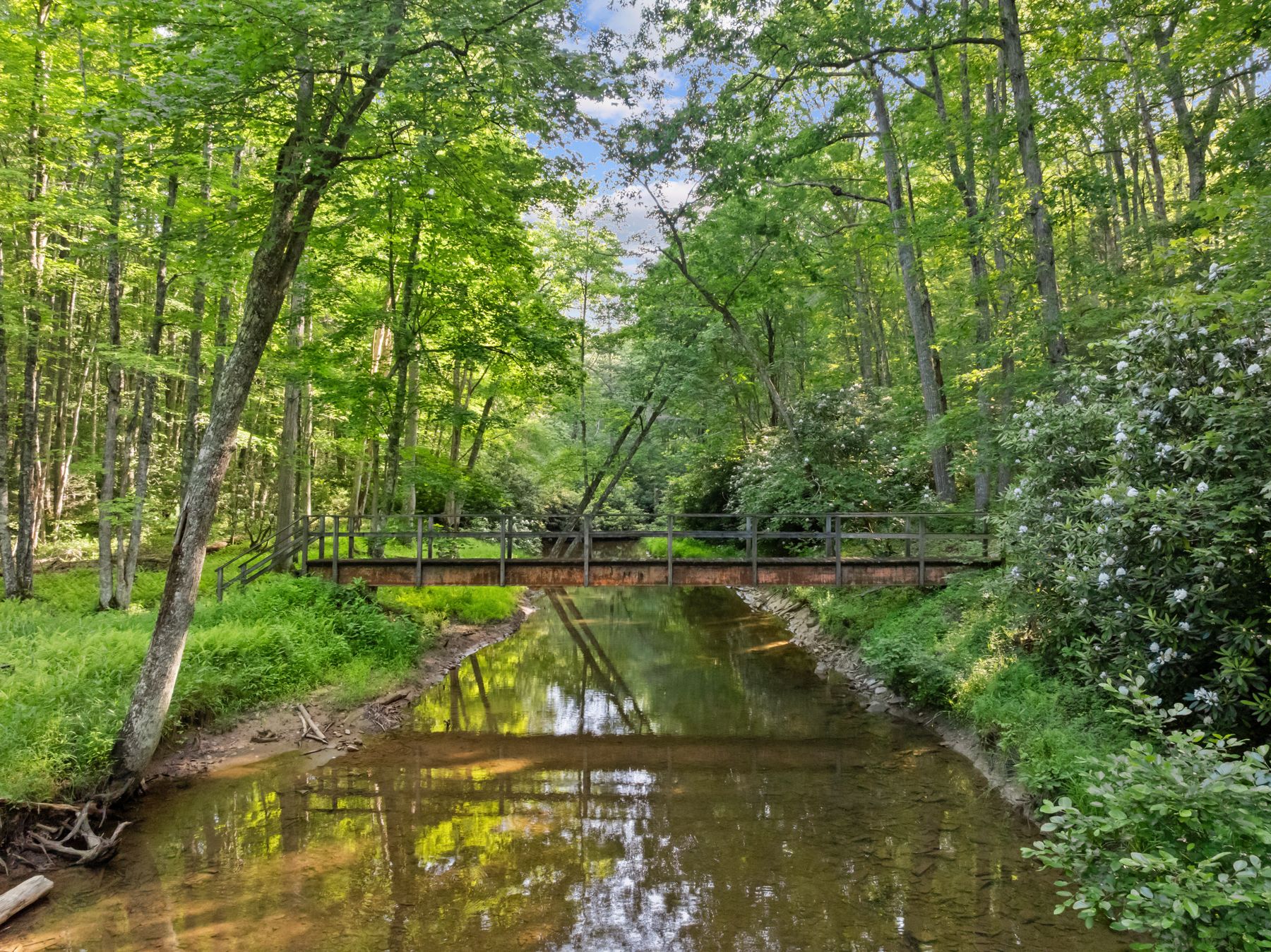
Upstream from the lake, a bridge crosses the creek beneath the forest canopy. There is more to the estate than the water’s edge: time for a walk, shade on a warm afternoon, and space to be together.
A stay holds the lodge and cottage. A wedding weekend holds the estate, from Friday afternoon through Monday morning, with the Lake Hall and lodging included. The gate code changes between guests. That is the privacy.